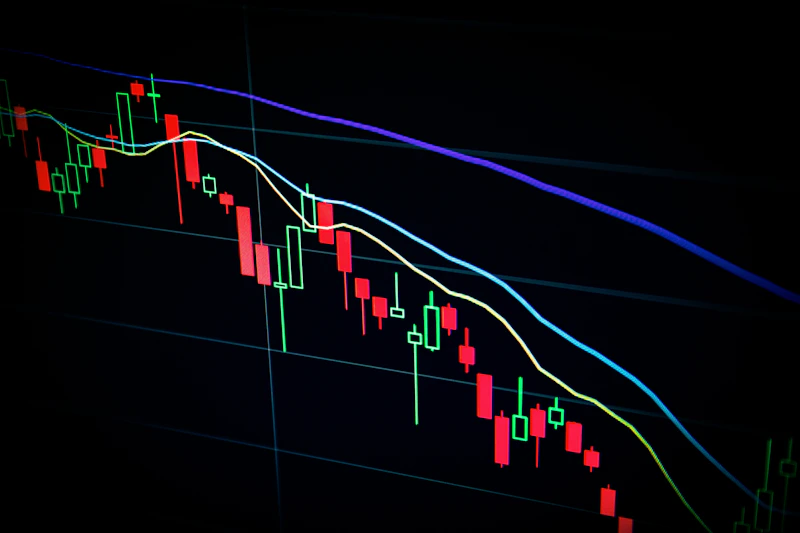
Introduction: Why Support and Resistance Matter
The S&P 500, comprising 500 of America's largest publicly traded companies, serves as the primary benchmark for the U.S. stock market. For traders and investors, understanding technical analysis—particularly support and resistance levels—provides a competitive edge in market decision-making. These price levels act as psychological and technical barriers where buying or selling pressure typically emerges, making them invaluable for timing trades and managing risk. Whether you're a day trader or long-term investor, mastering these concepts can significantly improve your portfolio performance and decision-making accuracy.
Understanding Support and Resistance Fundamentals
Support levels represent price points where demand historically prevents the index from falling further, while resistance levels mark prices where supply halts upward momentum. These levels form through repeated price interactions at specific points, creating psychological zones where traders cluster their orders. The S&P 500 exhibits these patterns across multiple timeframes—daily, weekly, and monthly charts all reveal distinct support and resistance zones that influence institutional and retail trading behavior.
When the S&P 500 approaches a support level, buyers typically emerge, expecting a bounce. Conversely, at resistance levels, sellers increase their activity. Breaking through these levels often signals significant market momentum shifts. For instance, if the S&P 500 breaks above a major resistance level with high volume, it frequently indicates the beginning of a new uptrend. Understanding these dynamics helps traders anticipate market movements before they fully develop.
The importance of support and resistance extends beyond mere price prediction. These levels inform portfolio risk management, helping traders determine appropriate stop-loss placements and position sizing. By anchoring decisions to technical levels supported by historical price action, traders can maintain discipline and consistency in their trading approach.
Current S&P 500 Key Technical Levels and Analysis
As of recent market data, the S&P 500 maintains several critical support and resistance zones that traders monitor continuously. Major support levels typically form at previous consolidation zones or round numbers like 4,500 and 4,700. Resistance often emerges at all-time highs and previous swing highs around 5,000-5,100 levels. These zones represent areas where significant institutional positioning occurs, making them more reliable than arbitrary price points.
Breaking down the S&P 500 into its major constituent sectors provides additional insight. Technology stocks, representing nearly 30% of the index, significantly influence overall index movement. When analyzing Apple (AAPL), currently trading with critical support at $180-185 and resistance at $195-200, traders observe that these individual stock levels cascade into S&P 500 technical patterns. Similarly, NVIDIA (NVDA) maintains support around $850-870 and resistance at $920-950, directly impacting semiconductor sector performance and broader index trajectory.
Tesla (TSLA), as another mega-cap constituent, shows support at $220-230 and resistance at $260-280. The correlation between these major holdings and S&P 500 movement demonstrates why analyzing individual component stocks alongside index-level technicals creates more comprehensive trading strategies. When multiple S&P 500 components simultaneously break resistance levels, the index typically experiences substantial upside acceleration.
Practical Trading Strategies Using Support and Resistance
Successful traders employ support and resistance levels in multiple strategic ways. The bounce strategy involves buying near strong support levels and selling near resistance, capitalizing on mean reversion behavior. For the S&P 500, this approach works particularly well during sideways consolidation phases when the index oscillates between established support and resistance zones.
The breakout strategy, conversely, anticipates moves beyond established levels. When S&P 500 breaks above resistance with increased volume, traders enter long positions, setting stop-losses just below the breakout point. This approach captured significant gains during 2023-2024 when the index repeatedly broke above previous resistance levels on positive economic data and earnings surprises.
Confluence analysis—identifying areas where multiple technical factors align—enhances reliability. When S&P 500 support coincides with a moving average, previous swing low, and a Fibonacci retracement level, the probability of a bounce increases substantially. Similarly, resistance confluences, especially where previous highs meet downtrend lines, signal high-probability reversal zones.
Risk management integration proves essential. Traders should place stop-losses just beyond support or resistance levels to protect capital if levels break unexpectedly. For a $5 million S&P 500 ETF position, risking only 1-2% of capital means setting stops approximately 200-300 index points away, proportional to current volatility.
Advanced Technical Indicators Enhancing Level Analysis
While price-based support and resistance form the foundation, integrating volume analysis and momentum indicators dramatically improves prediction accuracy. Volume profile reveals where most trading occurred at specific price levels, identifying genuine support and resistance zones versus random price touches. High-volume areas attract institutional traders and thus become more reliable technical levels.
Moving averages—particularly the 50-day, 100-day, and 200-day—frequently act as support and resistance, especially for the S&P 500 in trending markets. The 200-day moving average, representing the long-term trend, provides critical support during pullbacks in uptrends. Currently, the S&P 500's 200-day average sits approximately 200-300 points below current prices, serving as a major support zone that institutional investors actively defend.
Relative Strength Index (RSI) and MACD confirm whether the S&P 500 is overbought or oversold at support and resistance levels. When RSI exceeds 70 at resistance levels, it signals overextension, predicting potential pullbacks. Conversely, RSI below 30 near support suggests oversold conditions with bounce potential. These confirmations reduce false signals and improve win rates significantly.
Learn more about technical analysis fundamentals from Investopedia's comprehensive technical analysis guide. For regulatory compliance and market oversight insights, visit the SEC.gov investor information portal.
Conclusion: Actionable Takeaways for Market Success
Mastering S&P 500 support and resistance analysis equips traders with powerful tools for navigating volatile markets. These technical levels provide objective entry points, exit signals, and risk management frameworks that remove emotion from decision-making. By identifying key levels at 4,500, 4,700, and 5,000, traders establish clear expectations for market behavior and position accordingly.
The integration of individual stock analysis—monitoring AAPL, NVDA, and TSLA support/resistance—with broader S&P 500 technicals creates robust trading strategies. Remember that support and resistance levels strengthen with each successful test, making repeatedly-touched levels more reliable than freshly-established ones. Volume confirmation separates genuine levels from noise.
Action Items: (1) Map S&P 500 support and resistance on daily, weekly, and monthly charts to identify multi-timeframe confluences. (2) Monitor your top 10 S&P 500 holdings for their individual technical levels and their correlation impact on the index. (3) Implement volume-weighted moving averages alongside price-based levels to enhance prediction accuracy. (4) Backtest your support/resistance strategies across 2-3 previous market cycles to verify reliability. (5) Establish written trading rules defining exactly how you'll respond when levels break, ensuring consistent execution during volatile market conditions.